About the Intersection of AI and Medicine
Exploring how artificial intelligence is transforming genetic analysis and enabling faster, more accurate diagnostic results for patients.
The convergence of artificial intelligence and genomic medicine is fundamentally reshaping how we analyze, interpret, and deliver genetic test results. At IMC Genomics, we are both practitioners and observers of this transformation, integrating AI tools throughout our clinical workflow while remaining thoughtfully aware of their limitations.
In a modern clinical genomics laboratory, the journey from raw sequencing data to a clinician-ready report involves dozens of computational steps. Raw reads must be aligned to a reference genome, variants must be called and filtered, and each variant must be classified according to its clinical significance. Historically, much of the variant classification step required manual review by molecular geneticists — a process that is both time-consuming and susceptible to inter-analyst variability.
AI-powered classification tools are changing this workflow. Machine learning models trained on databases of millions of characterized variants can pre-classify novel variants with increasing accuracy, flagging likely pathogenic findings for priority review while filtering out the thousands of benign variants that appear in every genome. This does not replace human expertise — rather, it focuses human attention where it matters most.
At IMC Genomics, we use AI-assisted tools at several points in our pipeline. During quality control, automated algorithms assess sequencing metrics in real time, identifying potential issues before they propagate through the analysis. During variant annotation, ensemble machine learning models cross-reference multiple databases simultaneously, providing a preliminary classification that our molecular team then reviews and confirms.
The impact on turnaround time is measurable. Tasks that previously required hours of manual review can now be completed in minutes, without sacrificing accuracy. For time-sensitive tests like NIPT or STAT oncology panels, this acceleration directly benefits patient care by getting results to clinicians faster.
However, it is important to approach AI in genomics with appropriate caution. Machine learning models are only as good as the data they are trained on, and many existing training datasets underrepresent populations from Central Asia, the Middle East, and other non-European regions. This means that variant classification algorithms may have reduced accuracy for patients from these backgrounds. We account for this by maintaining curated internal databases and applying additional scrutiny to variants in underrepresented populations.
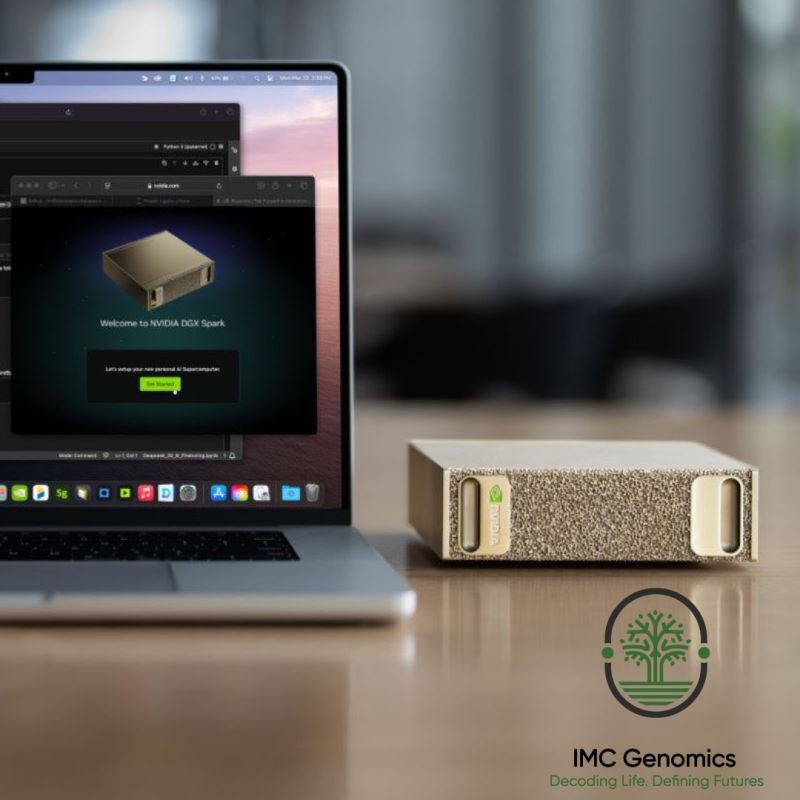
Looking ahead, we see AI playing an even larger role in predictive genomics. Polygenic risk scoring — which assesses disease risk based on the combined effect of hundreds or thousands of genetic variants — is inherently a computational challenge well-suited to machine learning approaches. As our NVIDIA DGX Spark infrastructure comes fully online, we will be positioned to explore these applications for conditions like cardiovascular disease, diabetes, and certain cancers.
The intersection of AI and medicine is not a future concept — it is the present reality of clinical genomics. Our goal is to harness it responsibly, transparently, and always in service of better patient outcomes.