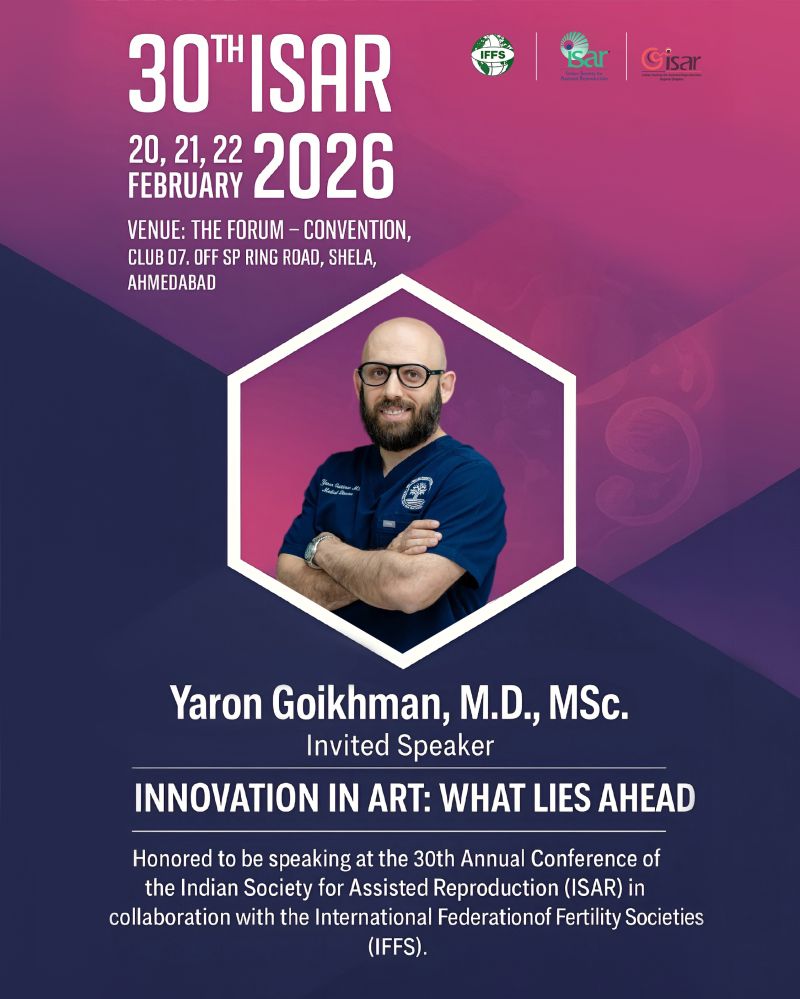
Innovation in ART and What Lies Ahead
A look at the latest innovations in Assisted Reproductive Technology and how genetic testing is reshaping fertility treatment outcomes.
Assisted Reproductive Technology (ART) has advanced remarkably since the first IVF birth in 1978. Today, genetic testing is at the center of modern fertility care, providing clinicians and patients with unprecedented insight into embryo health before transfer. At IMC Genomics, we play an active role in this evolution through our suite of preimplantation genetic testing services.
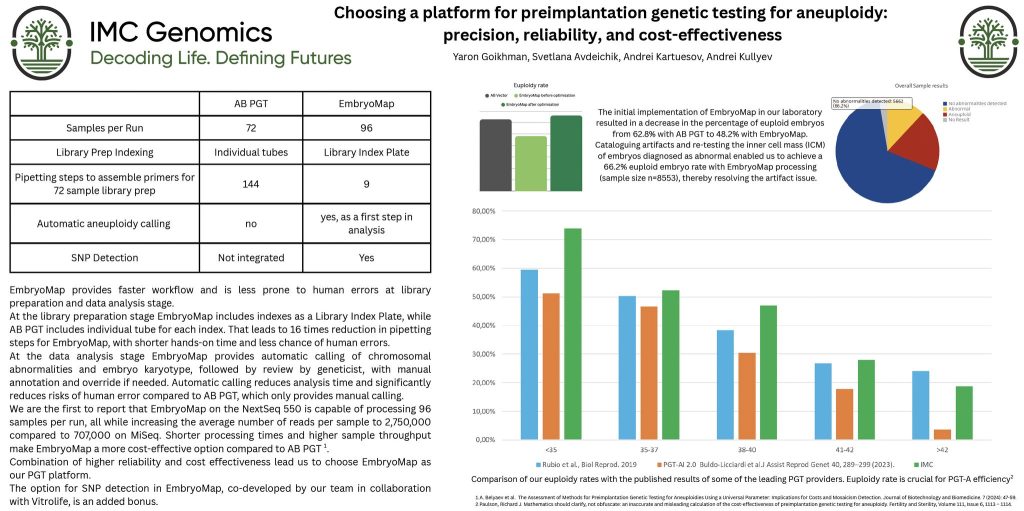
Preimplantation Genetic Testing for Aneuploidy (PGT-A) has become one of the most requested genetic tests in IVF clinics worldwide. By screening embryos for chromosomal abnormalities before transfer, PGT-A helps fertility specialists select the embryos most likely to result in a healthy pregnancy. Studies have consistently shown that PGT-A reduces miscarriage rates and improves implantation rates, particularly for women over 35 or those with a history of recurrent pregnancy loss.
Our laboratory processes PGT-A samples using the Illumina NextSeq 2000, which provides the throughput and accuracy necessary for reliable chromosome counting across all 23 pairs. Each sample undergoes whole-genome amplification followed by low-pass sequencing, and our bioinformatics pipeline has been validated to detect both whole-chromosome and segmental aneuploidies with sensitivity exceeding 98%.
Beyond PGT-A, PGT-M (testing for monogenic disorders) represents an equally important frontier. For couples who carry known genetic conditions — such as cystic fibrosis, sickle cell disease, or thalassemia — PGT-M enables the selection of embryos that are unaffected by the specific condition. This prevents the transmission of serious genetic diseases while allowing couples to have biological children. The process involves creating a custom genetic linkage map for each family, which our laboratory designs and validates before any clinical testing begins.
One emerging area is PGT-P, or preimplantation genetic testing for polygenic conditions. Unlike PGT-A and PGT-M, which look at chromosomal abnormalities and single-gene disorders respectively, PGT-P evaluates the combined risk from hundreds of genetic variants for complex conditions like heart disease, diabetes, or certain cancers. While still in its early stages and not yet widely adopted clinically, PGT-P represents a potential paradigm shift in how we think about preventive genetics in the context of fertility treatment.
The laboratory infrastructure required for these tests is substantial. Each PGT sample goes through multiple quality checkpoints — from biopsy handling and DNA amplification to sequencing, analysis, and clinical interpretation. Maintaining ISO 15189 accreditation and GenQA validation ensures that every step of this process meets international clinical standards.
For fertility clinics in Central Asia and the surrounding region, having a local PGT laboratory eliminates the need to ship biopsied cells internationally — a process that adds days to the timeline and introduces transportation risks. Our location in Tashkent allows us to receive samples from partner clinics across the region, process them quickly, and return results within the timeframe that the IVF cycle requires.
Looking ahead, we are exploring the integration of AI-assisted embryo selection tools that combine genetic data with morphological assessment, as well as non-invasive PGT approaches that analyze spent culture media rather than requiring an embryo biopsy. These developments, still primarily in the research phase, have the potential to make genetic testing in ART even more accessible and less invasive.
The intersection of genetics and reproductive medicine continues to expand, and IMC Genomics is committed to being at its forefront — delivering the tests, the technology, and the expertise that patients and clinicians deserve.